Authors' Notes: Sarah Langan on Trad Wives, female rage and feminist horror
The three-time Bram Stoker Award winner on the uncanny inspiration behind her new book, plus our feminist horror reading list.

Award-winning horror author Sarah Langan's new novel, Trad Wife, is a 'surreal and slick feminist feast' (Sarah Pinborough, bestselling author of Behind Her Eyes) that follows a journalist as she attempts to write an exposé of a famous influencer only for things to get a bit. . . sinister. . . Here, Sarah explains why she wanted to write about the Trad Wife phenomenon, followed by our feminist horror reading list.
Before last year, I hadn’t considered writing a Trad Wife novel. The appeal of women cosplaying as 1950s housewives seemed niche. And . . . weird. Why those outfits? Who in their right mind makes cough drops from scratch? Won’t your kid be better by the time they’re ready? If your husband is the breadwinner, then why are you earning a living off your influencer channel? I’m reminded of that line from Barry Levinson’s Tin Men: 'Wait a minute! I’m beginning to think Bonanza isn’t so realistic!'
Still, the popularity of Trad Wives nagged me. Why now?
They’re pretty. Those sourdough videos soothe like AMSR. But the world adores them for more reasons than wish fulfillment. They seem safe. Like home. Like unconditional love during a time when we crave stability most. Like a genie, returned to her bottle.
Something ominous is happening in the world. We can all feel it. The institutions we once depended on are crumbling. With every click and like and share, we weaken them, and enrich the platforms whose algorithms serve us up as polarizing content. But we can’t stay away. We can’t stop participating.
The #metoo movement addressed grievances of inequality. The new, chastened movement suggests to young women that equality is impossible. May as well seize power by any means possible, including selling out your own kind, donning the cloak of the passive, wielding the sword of the domestic. Sure, it’s not a job in banking, but it’s something.
Women have been angry for a long time. Rage isn’t new. Before, it was hidden. It looked like sickness, migraines, nervous exhaustion, and pettiness. In the early 2020s, it took the guise of retribution. Now it’s bare and furious, a witch’s grin, because, despite all we know, things aren’t getting better; they’re getting worse. I’d argue that a Trad Wife isn’t the opposite of female rage, but its avatar: repression, a mask of sweetness, and underneath, a destructive con. A great and terrible genie in a bottle.
What fun it is, to write about letting her out.
Our feminist horror picks. . .
Trad Wife
by Sarah Langan

Why read this: When things seem to be too good to be true, they probably are. With her handsome husband, seven perfect children, and a life of from-scratch meals made on her idyllic Black Swan Farm, Mia Wright is the queen of trad wife influencers. In steps journalist Jenny Kaplan, who arrives at the farm to profile Mia, fully expecting to write a scathing exposé. But there's something wrong at the farmhouse. The children sing strange nursery rhymes at night. Jenny's losing time. She's losing her hair. Is she also losing her mind?
Great for fans of: Get Out, Behind Her Eyes by Sarah Pinsborough
What the experts say: 'A surreal and slick feminist feast for the senses. . . A terrifying delight!' – Sarah Pinborough, author of Behind Her Eyes 'Wonderfully wrong in every way, Trad Wife wants to wriggle down your mouth hole and lay eggs' – Grady Hendrix, author of Witchcraft for Wayward Girls.
The Brides
by Charlotte Cross

Why read this: This is a chilling reimagining of Bram Stoker's Dracula, which breaks the female characters out of the contrasting elements of Victorian femininity that trap Stoker's Lucy and Mina, and into a devastating sapphic romance. It's 1884, and Mafalda is travelling to Budapest to care for her aunt, accompanied by her secret love, Lucy, and her chaperone, Eliza, and lady's maid, Alice. When Alice, cursed with the Sight, is taunted by visions, and Eliza becomes suddenly ill, they seek the healing waters of Transylvania and are invited to Castle Dracula. But it seems their host doesn't really having healing in mind after all. . .
Great for fans of: Hungerstone by Kat Dunn, The Historian by Elizabeth Kostova.
What the experts think: 'Dracula's worthy successor: a gothic, sapphic epistolary novel that thrills, chills, and delights in equal measure.' – Johanna Van Veen, author of Blood on Her Tongue. 'I drank in this wonderfully sapphic, gothic tale with a sense of ever-deepening dread.' – Francesca May, author of This Vicious Hunger.
Fever Dream
by Samanta Schweblin

Why read this: Described by the Guardian as 'a novel about maternal love, sacrifice and the lengths we go to protect our children,' Fever Dream is, amongst other haunting themes, an unnerving and uncanny exploration of the fears of motherhood. Amanda knows she has to answer the questions. Lying feverish and unseeing in her hospital bed, she tries her best to account for how she came to be there. She remembers the lake, the house, and the strange woman next door with her unthinkable confession. She remembers the fear of losing her young daughter, Nina. And now she is alone and Nina is gone. At what moment did everything go dark?
What the experts think: 'Read this in a single sitting and by the end I could hardly breathe. It's a total mind-wrecker.' – Max Porter, author of Grief is the Thing with Feathers.
Honeysuckle
by Bar Fridman-Tell

Why read this: This inventive and unsettling reimagining of Blodeuwedd from Welsh mythology becomes a kind of feminist Frankenstein. Lonely Rory is made a friend by his sister, woven from flowers and words. But Daye turns out to be a seasonal creation who must be woven back together before she falls gruesomely apart. As time goes on, Rory sinks deeper into research and experiments to end the cycle of bloom and decay. And as Rory grows older, his thoughts turn darker.
Great for fans of: Tender is the Flesh by Agustina Bazterrica, Her Body and Other Parties by Carmen Maria Machado, Katherine Arden.
What the experts think: 'A hauntingly lyrical, fairytale-like horror. . . A tale in which beauty is inextricably intertwined with rot.' – Kalynn Bayron, author of Cinderella is Dead.
Witchcraft for Wayward Girls
by Grady Hendrix
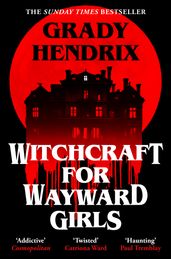
Why read this: While we're on the subject of female rage. . . Grady Hendrix's latest is a Southern Gothic horror set in a 'home' for unwed mothers in 1970s Florida. This is where wayward girls are sent to have their babies in secret, have them adopted in secret, and go home and pretend it never happened. Every second of new arrival Fern's day is rigidly controlled by adults who claim to know what's best. Then she's given a book about witchcraft, and the balance of power suddenly shifts. But such gifts always come with a price.
What the experts think: 'Terrifying, darkly funny, moving, immersive, and deeply relevant – a page-turner that will keep you up until one in the morning.' – Simone St. James, author of Murder Road