Authors' Notes: Janice Hadlow on the Pride & Prejudice characters she wishes she could spend more time with
Janice Hadlow's The Other Bennet Sister (now a hit BBC series) puts Lizzy and Jane's sister Mary centre stage. But which other characters would the author like to see more of (and which, perhaps, not so much. . .)?

Musing on the ambivalent appeal of the central characters of Mansfield Park, the writer Kingsley Amis memorably concluded that 'to invite Mr and Mrs Edmund Bertram round for the evening would not be lightly undertaken.’ Pride and Prejudice is a far less sober book than Mansfield Park; Austen herself called it 'light, bright and sparkling’, and populated it with an exuberant cast of secondary players with as much power and energy as those who occupy centre-stage. We meet a lot of people during the course of Pride and Prejudice, and if – as I do – you enjoy reading the novel again and again, you eventually find yourself wondering about some of those minor characters, imagining who they are when they’re not on the page. What you would make of them if you were ever to meet? Would it be the beginning of a wonderful friendship? Or more of a duty to be performed? Who would be warm and welcoming? Who boring and dull? In short, who would pass the Amis test – and who would fail it?
It’s hard to imagine Mr and Mrs Collins’s arrival bringing much joy to any social event. Mr Collins’s conversation is not such as to excite or entertain; and Charlotte’s retreat into herself, as a means of surviving her pragmatic marriage, has made her cautious and guarded. In the domain of her own home, she might reveal more of herself to a few well-chosen female friends. But as a couple, they are not likely to be much sought after, except by Lady Catherine de Bourgh, who keeps them nearby whenever a little flattery is called for.
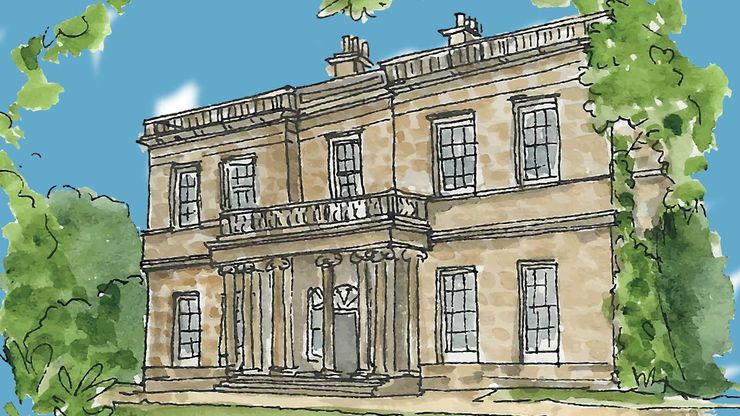
An invitation to the Bingleys, however, would be infinitely more attractive. Generosity and pleasure are the guiding principles at Netherfield Park. Mr Bingley, a true gentleman, exerts himself to make everyone welcome, exuding good cheer and conviviality. Jane, serene and utterly content in her new life, wants everyone to be as a happy as she is. Together, they beam innocently at the world, seeing the best in everyone. As Mr Bennet pointed out, neither have much idea of management or economy, and can expect to be cheated and imposed upon by everyone – but who really minds if the dinners are sometimes cold, or someone has purloined the best port? Their naive goodness is so evident, their happiness so infectious, that everyone loves them (even the pilfering servants).
‘Lady Catherine de Bourgh is a snob and a bully, a self-obsessed meddler, deaf to any feelings but her own. Yet she lights up every page on which she appears.’
Pride and Prejudice has its villains as well as its charmers – George Wickham for example, is both – but for me, the most wickedly fascinating of them all is Lady Catherine de Bourgh. She is a snob and a bully, a self-obsessed meddler, deaf to any feelings but her own. Yet she lights up every page on which she appears. Her final battle of wills with Elizabeth in the garden at Longbourn is one of the book’s great scenes, where two enemies, equally matched in intellect and indignation, fight it out with no quarter given. It would be pointless to expect friendship from Lady Catherine, she is far too grand for that. But if you are not her unfortunate victim, there is something horribly compelling about the bluntness of her cruelty and the imperviousness of her self-regard. I’d love to know more about her first visit to Pemberley after Elizabeth and Mr Darcy are married – but only from a safe distance! She’s a pleasure best savoured from some way off, like a huge firework exploding: you can’t help but gasp at the sight, though it’s best enjoyed when you’re not too close.
But there are two characters with whom I felt such an affinity, such confidence in their importance, that I was determined to spend more time with them. As a result, Mr and Mrs Gardiner feature very prominently in The Other Bennet Sister. For me, they are perhaps the most consistently attractive personalities in Pride and Prejudice. They are kind, sensible and considerate. They clearly love each other, are devoted to their children and offer up their cheerful home as a refuge to their Bennet nieces when needed. Much as I’d have liked to, I couldn’t connect with them myself – but I sent Mary Bennet there, so that she could see at first-hand what it was to live amongst affection and kindness. It is through the Gardiners' patience and encouragement that Mary is emboldened to take her first steps towards achieving happiness of her own. They help save her – and, at the same time, I have no doubt that there is never any shortage of good conversation or excellent food at their table. Even Kingsley Amis would have enjoyed being their guest.
Janice Hadlow is the author of The Other Bennet Sister and Rules of the Heart
The Other Bennet Sister
by Janice Hadlow

Now a major BBC One series, Janice Hadlow's novel gives life to Mary Bennet, cast aside amidst the glory of her sisters in Pride and Prejudice's Bennet family. In The Other Bennet Sister, we see Mary as a person fighting for validation in a family where she feels she doesn’t belong, but for whom there might be a happy ending after all.
Rules of the Heart
by Janice Hadlow

Set in an era where propriety is everything, Janice Hadlow's Rules of the Heart is a masterful and evocative portrait of eighteenth-century English society. Inspired by a real-life love affair, the novel follows Lady Henrietta Bessborough, a woman who believes she understands the rules of the game until she falls for Lord Granville, a man twelve years her junior. As their passion intensifies, Henrietta finds herself caught between what society expects and her deepest desires, a conflict that threatens to unravel her life and lead to her social ruin. Hadlow captures the nuances of a time when every step was governed by appearances, making this a powerful and absorbing read.